Reminder: Daylight Saving Time Begins, Change Your Smoke Alarm Battery
Daylight Savings is a great reminder to review your home’s fire safety measures. As you adjust your schedule, please consider these extra tips to ensure your smoke alarms and fire prevention plans are in top shape:
-
Test Your Smoke Alarms Thoroughly:
- Place a smoke alarm on every level of your home, including the basement, in every bedroom and outside each sleeping area.
- Test smoke alarms monthly by pushing the test button. If you cannot reach the button easily, use a broom handle.
- When a smoke alarm sounds, get outside, and stay outside.
- DO NOT remove the batteries from your smoke alarms to put in other appliances.
- Replace all smoke alarms in your home every 1O years or sooner if they don’t respond when testing:
- For smoke alarms with a non-replaceable battery, replace the entire smoke alarm if it begins chirping.
- For smoke alarms with regular batteries, replace the batteries once a year when you change your clocks (fall back, spring forward), or before if the battery starts to chirp.
- Smoke alarms should be inter-connected, so when one alarm sounds, they all do.
- Keep smoke alarms clean. Vacuum or dust your smoke alarms according to manufacturer’s directions to keep them working properly.
- Teach children what the smoke alarm sounds like and what to do in the event it sounds.
-
Maintain Interconnected Alarms:
- If your alarms are connected, verify that they are communicating effectively across your home.
- Check that any wireless systems are functioning without interference.
-
Update and Practice Your Fire Escape Plan:
- Walk through your home to confirm all exit routes are clear and accessible.
- Revisit your designated meeting spot and ensure everyone in your household is aware of it.
- Schedule a quick fire drill to practice getting out safely and efficiently.
-
Review Other Fire Safety Equipment:
- Check that your fire extinguishers are fully charged and in an easy-to-reach location.
- Verify that any additional safety tools, like carbon monoxide detectors, are working as they should.
Smoke Alarms for the Deaf and Hard of Hearing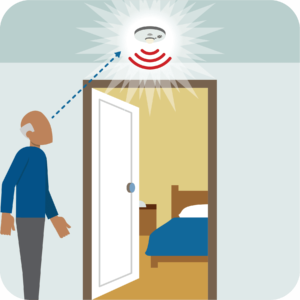
The deaf and hard of hearing community need specially designed smoke alarms. It’s also vital they’re aware of the importance of a proper home fire escape plan.
For more information on smoke alarms for the deaf and hard of hearing, contact the Hearing and Loss Association of America at 301-657-2248 or visit the Hearing Loss of America Association’s website.
Additional Safety Tips
When changing the batteries in your smoke alarm, change the batteries in your NOAA All Hazard/Weather Radio. Hazardous weather conditions can develop at any time – Be Prepared! Preparation is your best defense!
For more information on smoke alarm safety and how to prevent home fires, visit the National Fire Protection Association and the U.S. Fire Administration.
Using Daylight Savings as a cue for these checks can help keep your home safe and ensure you’re prepared in case of an emergency.