OWL Recognizes ALS Awareness Month: Chief Mike Clark’s Story
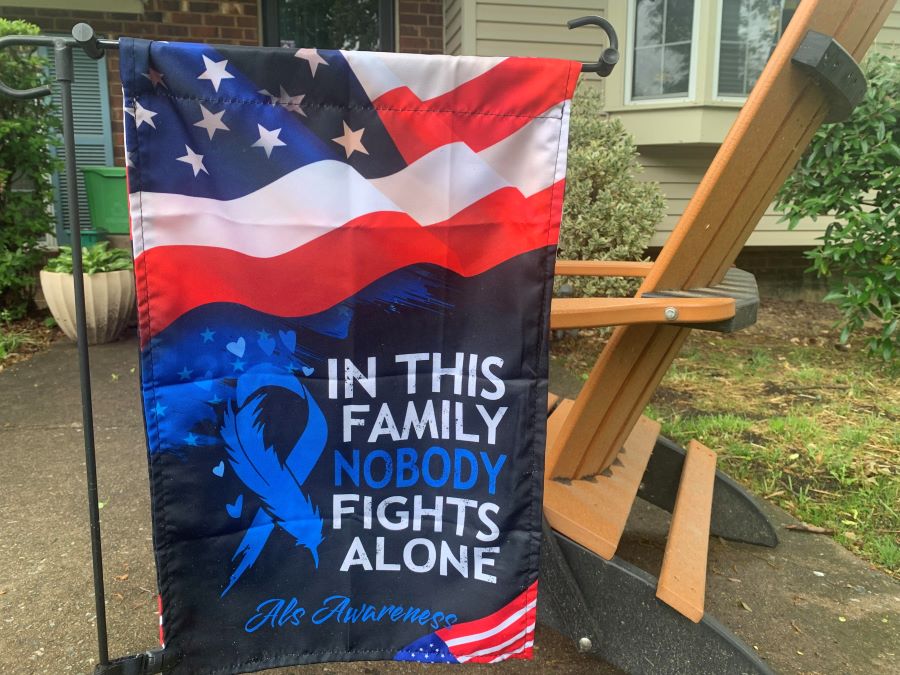 At OWL Volunteer Fire Department, we pride ourselves on service, strength, and standing by one another—especially in the toughest of times. This May, during ALS Awareness Month, we honor one of our own: Chief Mike Clark. A dedicated firefighter with nearly 50 years of service, Chief Clark has not only led on the front lines but now leads in a different way—by bravely sharing his personal battle with ALS. His story is one of resilience, humility, and community, and we invite you to read it, learn from it, and join us in raising awareness for this devastating disease.
An article written by Chief Mike Clark:
Amyotrophic Lateral Sclerosis (ALS) aka Lou Gehrig’s Disease.
“Why am I talking about ALS? For those who didn’t know, I have this terrible disease. More and more firefighters are being diagnosed with ALS—almost a 2-to-1 ratio compared to cancer. My goal is to teach my friends some of the signs and symptoms of ALS that you might want to look out for.
I grew up in the fire service in the ’70s, starting at age 16. When I turned 18, I was voted in as a senior member of the fire department. Back then, we had long Nomex coats, 3/4 boots, and steel SCBAs. We went to a lot of fires between ’78 and ’82. We’d fight the fire, take a break, drop our heavy SCBAs, then go back in for salvage and overhaul. When we got back to the station, we’d hang our gear in the racks in the engine bay.
We didn’t have the knowledge we do now—cleaning your gear, having a second set, or using updated SCBAs. So the main goal here is just to let you know what to look for when it comes to ALS.”
This is my story.
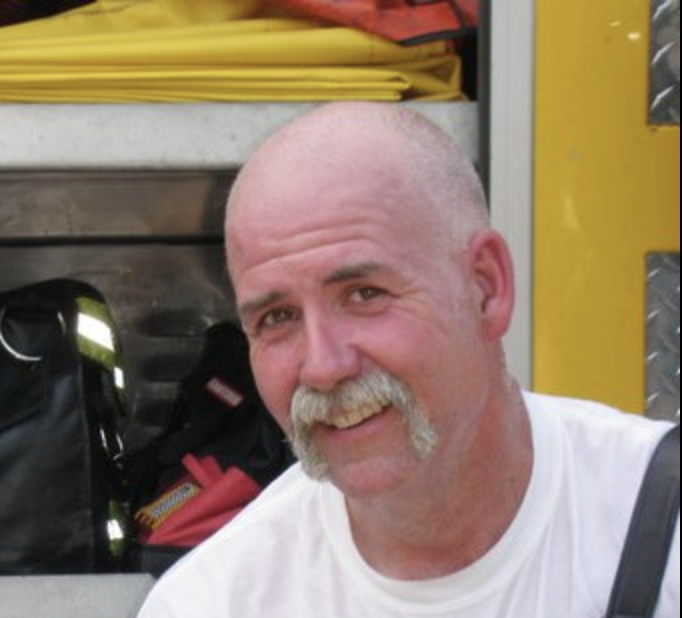 In late 2016, I noticed that I was slurring my words, but not all the time. Andrea was very concerned that I might have had a stroke. After numerous doctors’ appointments and MRIs, we still had no answers.
At that time, I was Assistant Chief and running command. I started to worry that people might think I was drunk. I informed the Chief that I was stepping away from my duties as AC, ending my 23 years volunteering with OWL.
With no still no answers, we ended up at University of Virginia hospital, hoping someone could explain to me what was going on. We met with a neurologist who diagnosed me Bulbar Onset, he explained that I had a motor neuron disorder which affects my speech and tongue movements.
As things progressed, I lost my ability to speak, and I began to have balance issues. I used a walking stick to help with walking. Over time, the medication I was on for ALS made me feel tired most days. One of the side effects was drowsiness, and I often felt like I was going to pass out. After my third medic unit ride to the ER, I ended up getting a pacemaker. I was fine for a while, and I noticed walking up and down the stairs were becoming harder. We decided to move from our bedroom on the third floor to the basement.
That’s where the firehouse family started. To move into the basement, we had to put furniture into a storage unit, then we had to move the bedroom furniture to the basement. This was accomplished in one day. (Thanks to Andrea’s shift showing up and making this happen. I was using a Rollator to help get around the house. A Rollator is combination of a walker with wheels, brakes and a seat.) As walking got even more difficult, the firehouse families stepped in again.
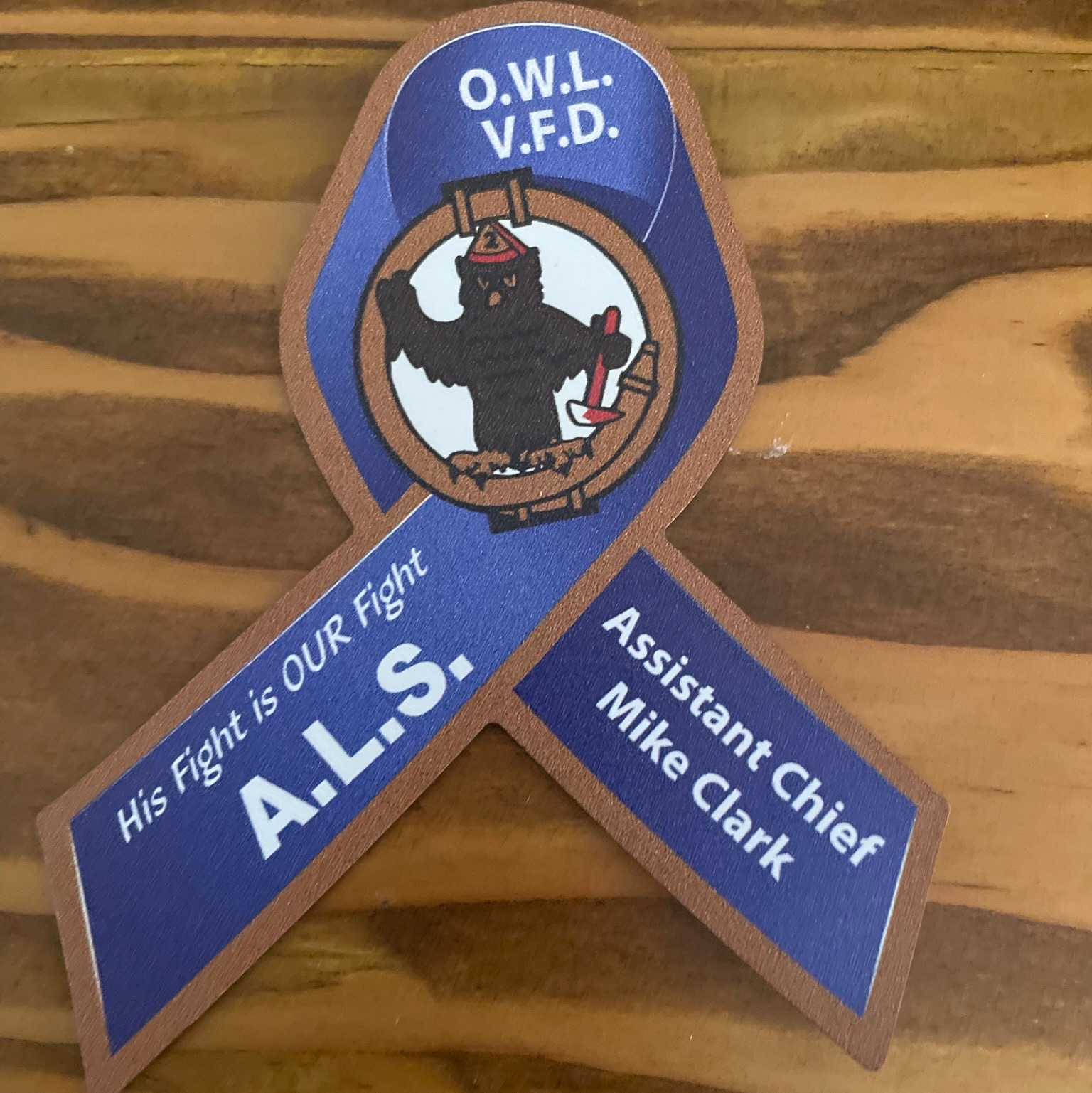 Being in the fire service for going on 49 years I was used to giving help, and I had to eat my pride and ask for help. The bathroom in the basement was in need of renovation to be able to get around and to shower. The bathroom was renovation by Rhoads Restoration (B shift battalion chief’s company) from Andrea’s firehouse. OWL also held a fundraiser dinner for the bathroom renovation. I was surprised at the turnout and the money raised, needless to say I was definitely humbled. Between both firehouse families coming together to make my life easier for me and Andrea. We wanted to say, “Thank you to everyone who has donated their time and energy to help us get through this tough time.” We love you and consider you as part of our family.
ALSO, patients usually have a life expectancy from time of diagnosis to death is 2-5 years. I’m still trying to do my best to keep focus and keep fighting. I have been fighting this disease for 9 years so far and I continue to fight the fight and never give in to this disease.”
To learn more about ALS, visit: Dedicated to Finding a Cure for ALS | The ALS Association.